
Why Oil Prices Spike: A Field Guide
A tanker in the wrong strait, a surprise OPEC+ cut, a cold snap. The same word — supply — sits behind almost every oil spike.
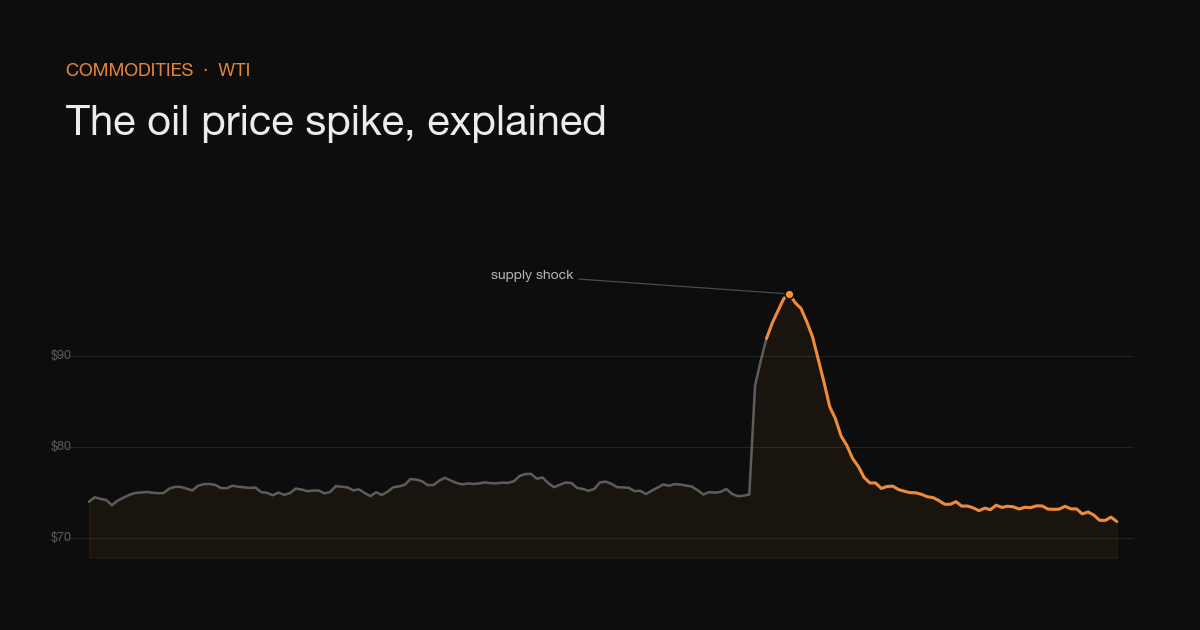
Oil is the commodity that shows up in every headline because it shows up in every supply chain. When the price gaps higher, the cause almost always sorts into one of three buckets.
The three drivers
| Driver | Example | How long it usually lasts |
|---|---|---|
| Supply shock | OPEC+ cut, sanctions, outage | Until production is restored |
| Demand surprise | Strong travel season, cold snap | Seasonal / cyclical |
| Risk premium | Conflict near a shipping chokepoint | Until the threat fades |
Supply: the usual suspect
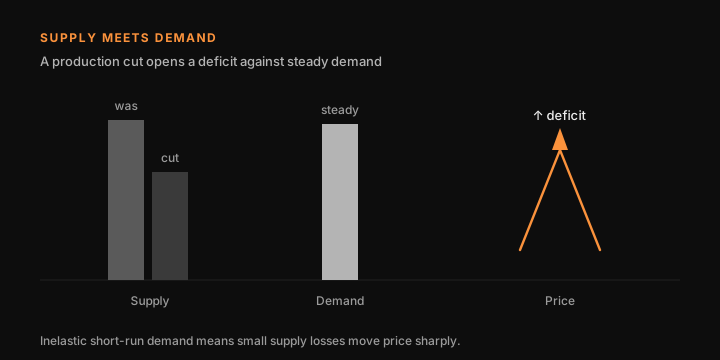
Most sharp spikes are supply stories. A surprise production cut from OPEC+ removes barrels from the market on purpose. Sanctions or an unplanned outage remove them by force. Because oil demand is inelastic in the short run — you still have to drive to work — small supply changes can move the price a lot.
Watch the chokepoints. A meaningful share of the world’s seaborne crude passes through a handful of narrow straits. A threat to any one of them adds a “risk premium” to every barrel, whether or not a single shipment is actually stopped.
Demand and the risk premium
Demand surprises are slower and more seasonal — a hot summer lifts gasoline, a cold winter lifts heating fuels. The risk premium is the trickiest: it is the market pricing the probability of a future disruption. It can appear and evaporate in days, which is why oil can spike on a headline and give it all back a week later.
How to read the next spike
- Ask which bucket: is a barrel actually missing (supply), or is the market pricing fear (risk premium)?
- Check inventories — falling stocks confirm a real shortage; stable stocks suggest a premium that may fade.
- Watch the futures curve: backwardation (near months priced above far months) signals tight physical supply now.
Naming the driver is most of the work. A supply outage and a risk premium can produce the same price gap — but they fade on very different timelines.
Sources
- EIA weekly petroleum status report (inventories).
- OPEC+ production announcements.
- Futures-curve data (backwardation vs. contango).